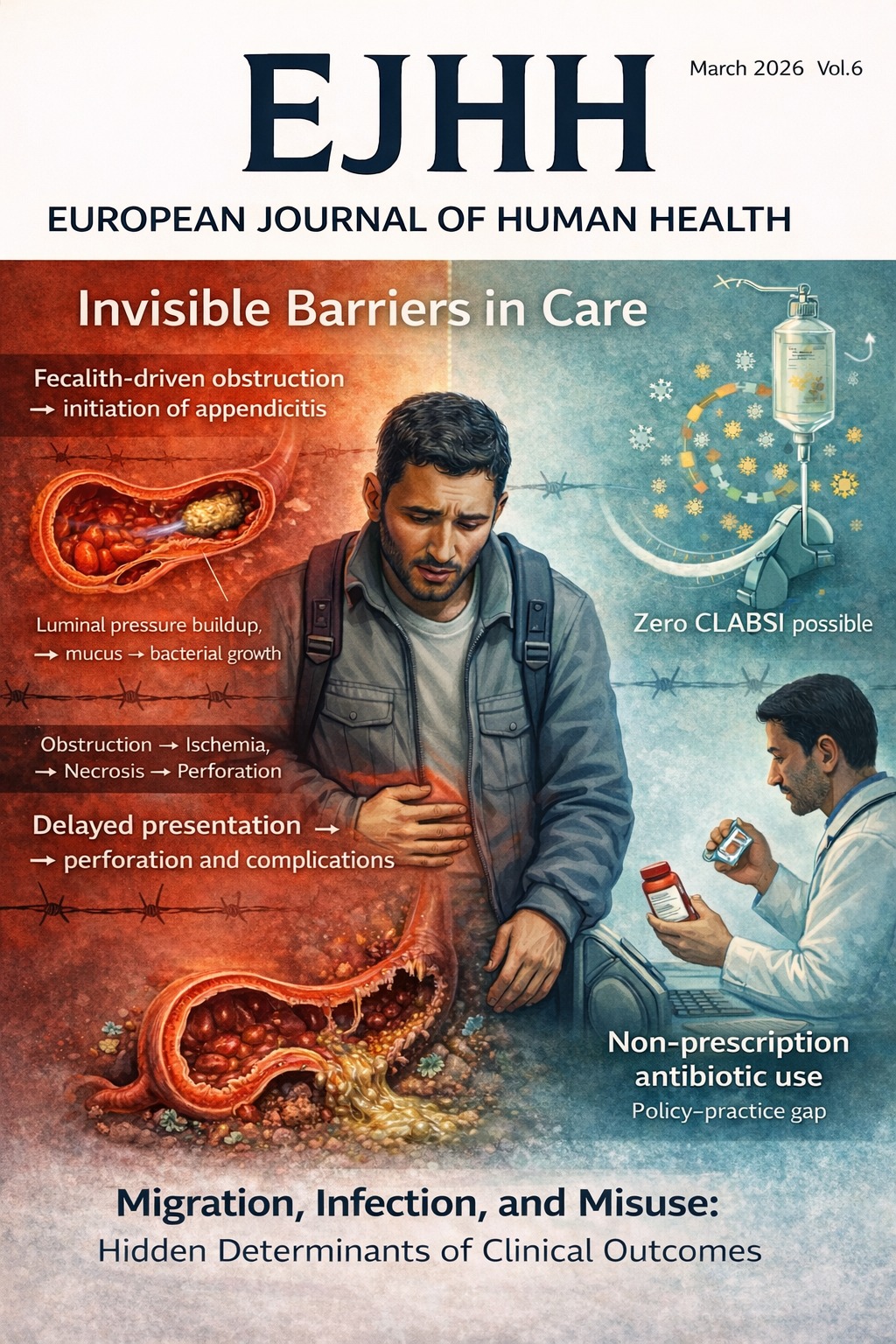
Acute Appendicitis Severity in the Early Phase of Syrian Migration to Türkiye: A Comparative Study of Syrian Immigrants and Turkish Citizens
Author :


Abstract
Keywords
Abstract
Background: Migration-related barriers may influence access to timely healthcare, potentially leading to more severe disease presentations in acute conditions. Acute appendicitis (AA) is a time-sensitive surgical emergency in which delays are strongly associated with progression to complicated disease. Evidence regarding disparities between migrant and native populations remains limited, particularly in Türkiye.
Aim: To compare the clinical and histopathological characteristics of AA between Syrian immigrants and Turkish citizens, and to identify factors associated with complicated appendicitis.
Methods: This retrospective comparative cohort study included 138 adult patients (69 Syrian immigrants and 69 Turkish citizens) who underwent appendectomy between 2016 and 2018 at a tertiary care center. Appendicitis was classified histopathologically as simple or complicated (gangrenous or perforated). Demographic and clinical variables were compared between groups. Binary logistic regression analysis was performed to identify independent predictors of complicated appendicitis.
Results: Syrian patients were significantly younger than Turkish patients (median age: 23 vs. 32 years; p<0.001), while gender distribution was similar. Complicated appendicitis was more frequent among Syrian immigrants compared to Turkish citizens (31.9% vs. 17.4%; p=0.048). In multivariable analysis, Syrian nationality was independently associated with an increased risk of complicated appendicitis (OR: 2.56; 95% CI: 1.17–5.60; p=0.018). Age >45 years was also an independent predictor (OR: 3.06; 95% CI: 1.06–8.98; p=0.039). Gender was not associated with disease severity.
Conclusion: Syrian immigrants exhibited a higher rate of complicated appendicitis compared to Turkish citizens. In the absence of direct measures of delay, complicated appendicitis should be interpreted as a proxy indicator of delayed presentation and disparities in healthcare access rather than a direct measure of care-seeking behavior. These findings underscore the potential impact of structural barriers on disease severity and highlight the need for interventions aimed at improving timely access to emergency care in vulnerable populations.
Keywords
Acute appendicitis; Complicated appendicitis; Migration; Refugees; Health disparities; Healthcare access; Delayed presentation; Syrian immigrants; Türkiye; Emergency surgery