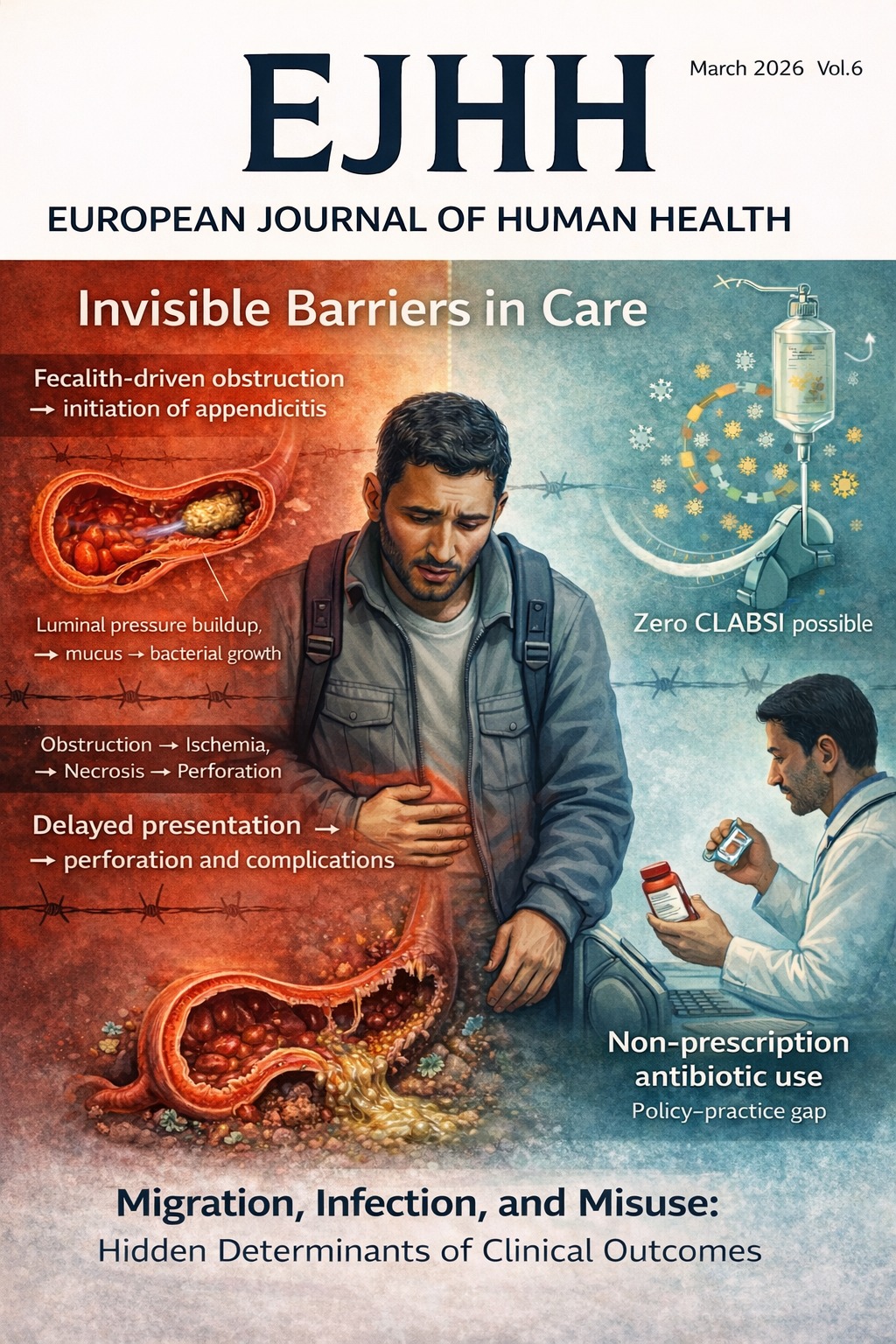
Persistent Non-Prescription Antibiotic Use in Primary Care Despite Regulatory and Performance-Based Stewardship: A Policy–Practice Gap
Author :


Abstract
Keywords
Abstract
Aim: The aim of this study was to determine the knowledge, attitudes and behaviors of patients who applied to the family medicine outpatient clinic of a university hospital about rational antibiotic use.
Materials and Methods: The population of this cross-sectional and analytical study consisted of patients aged 18 years and over who applied to Erciyes University Faculty of Medicine Hospital Family Medicine outpatient clinic between August 2024 and October 2024. A total of 225 patients, 145 females and 80 males, were included in the study. After collecting the sociodemographic data of the participants, questionnaire questions and the Rational Antibiotic Knowledge and Attitude Scale were applied to the participants using face-to-face interview technique. Statistical analysis of the data was performed using SPSS (Statistical Packageforthe Social Sciences) 22.0 package program
Results: The mean age of the participants was 30.69 ± 13,59 years and the age distribution was between 18 and 79 years. Approximately 50% of the participants were in the 18-24 age group. 145 (64.4%) of the participants were female and 80 (35.6%) were male. While 145 (62.2%) of the participants were married, 88 (37.8%) were single. 179 (79.6%) of the participants were university/high school graduates, 29 (12.9%) were high school graduates, 7 (3.1%) were middle school graduates, 9 (4%) were primary school graduates and 1 (0.4%) was illiterate. Approximately 3/4 of the participants had an infection within the last year and approximately 2/3 of the participants used antibiotics. There was a statistically significant correlation (p<0.05) between having spare antibiotics and using antibiotics without a prescription, requesting a doctor to prescribe antibiotics and requesting to buy antibiotics from a pharmacy without a prescription in the last year. When we asked the participants about the source of their information about antibiotic use, 92.9% of the participants answered “doctor”. Among those whose source of information was a physician, 78.9% knew the purpose of antibiotic use correctly. The mean AAC attitude score (69.25) was higher than the mean AAC knowledge score (48.84). There was a moderate positive correlation between the AAC knowledge and attitude scale. It was found that as the knowledge level of the participants increased, their attitude scores also increased. As the age of the participants decreased, their AAC knowledge and attitude scores increased. A positive correlation was found between education level and AAC knowledge score.
Conclusion: It is recommended that the reasons affecting the concept of rational antibiotic use, which plays an important role in health promotion, should be determined through studies to be conducted on larger masses. Thus, more accurate clues will be obtained for effective and curative solutions to be made in order to raise public awareness. In order to create awareness of rational antibiotic use, education of individuals should be given importance and education programs should be prepared accordingly. In addition to community education, in-service training programs should be organized to increase the awareness and knowledge level of healthcare professionals about rational antibiotic use. It should be emphasized that physicians should inform the public more.
Keywords
primary care; non-prescription antibiotic use; antimicrobial resistance; antimicrobial stewardship; policy–practice gap; sociodemographic factors